Portugal, Camões and Portuguese Communities Day

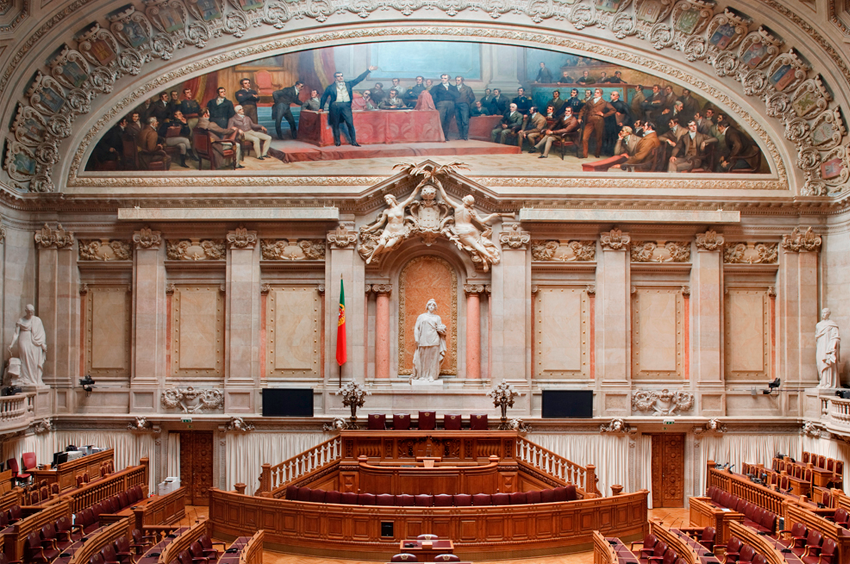
Photograph: Jose Rosa | Belem, Portugal
The Brazilian people are formed by a great mixture of cultures, among which stands out the portuguese culture. For more than 300 years, Portugal was a metropolis of Brazil, exercising its control over the colony not only political and administrative, but also over customs, dictating fashion, habits and behaviors, including through force, during the term of the “Holy Inquisition” Court.
But, above any other Portuguese influence in Brazilian culture, the language it is undoubtedly one of the significant ones. And it was in honor of the greatest exponent of Portuguese literature that the 10th of June was established as the Portugal Day. By determination of King D. Luís I, in 1880 the date was declared “National Feast and Grand Gala Day” to commemorate, only in that year, the 300 years of the hypothetical date of the death of Luís de Camões, June 10 1580. After coming and going, in 1978, the Third Republic period began to have the current symbolism and be considered a holiday, called Portugal, Camões and Portuguese Communities Day.
HERE YOU CAN START BUILDING YOUR GENEALOGICAL TREE.
The date, for Brazilians, is an invitation to reflection on the various influences that our colonizers had on our national identity, which together with the language, transplanted to the colony the Catholic religion and parties that today are inseparable from Brazilian culture: the carnival and the June festivities, in addition to regionalist revelry, such as cavalhadas, bumba-meu-boi, fandango and farra do boi. Brazilian folklore also brings beings inserted in our imagination by the Portuguese, such as the cuca, the bogeyman and the werewolf, in addition to many legends and children's games, such as the cantigas de roda.
Cachaça and feijoada, elements so characteristic of Brazilian cuisine, were adapted, respectively, from bagaceira, a Portuguese drink made from grape marc, and from traditional Portuguese stews. Apart from the dishes adopted directly from Lusitanian cuisine, such as codfish and egg strands, in addition to the insertion of fruit plants, such as jackfruit and mango, which are not native to Brazil.
This cultural heritage, as well as other traditions, are some of the bonds that remain between Brazil and Portugal, which has facilitated the choice of Brazilians for migrate for the European country. And Portugal has received more and more Brazilian migrants, who achieve naturalization both because they have Portuguese parents and because they have ties to Sephardic community (Jews persecuted during the Iberian Inquisition).
HERE YOU CAN START BUILDING YOUR GENEALOGICAL TREE.
"Because of a controversy, they are changing a historical reparation," says Isabel Comte.
The proposed changes to the Nationality Law in Portugal remain at the center of public debate, even after the decision […]
 Per Marketing Martins Castro
on December 29, 2025
Per Marketing Martins Castro
on December 29, 2025

"The Constitutional Court gave time, it didn't change the law," says a lawyer from Martins Castro.
The recent decision by the Portuguese Constitutional Court, which blocked key parts of the government's proposal to tighten access […]
Per Marketing Martins Castro
on December 29, 2025

Nationality for minor children: why is the process usually simpler?
Among the various pathways provided for in the Portuguese Nationality Law, transmission to minor children is usually perceived as a […]
Per Marketing Martins Castro
on December 29, 2025